From the "Doxxing" Incident to the Electronic Seal Security Crisis: Who Will Safeguard Our Digital Identities?
Publish Time: 2026-01-16
Recently, the hashtag "Baidu Vice President's Daughter Doxxing a Pregnant Woman" suddenly soared to the top of trending topics, but what piqued everyone's curiosity even more was—what exactly is "doxxing"?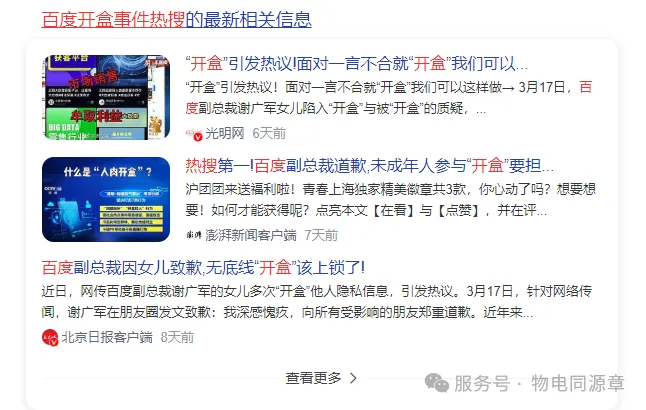 "Doxxing" is an internet slang term that refers to the act of publicly exposing someone's private information online, constituting a form of cyberbullying. Its core involves illegally obtaining and disseminating others' personal information, including real names, home addresses, phone numbers, photos, ID numbers, bank statements, and internet browsing histories.In the digital age, just how many platforms are "pricing" our identity information? When personal privacy can be leaked at will, can electronic technologies that claim to ensure security, such as electronic seals used for signing contracts worth millions, really be trusted?The Trust Crisis Surrounding Electronic Seals?As a standard feature of digital transformation, electronic seals should epitomize efficiency and security. However, following the fallout from the Baidu incident and the exposure of the 315 electronic signature incident, public skepticism has intensified:Frequent technical vulnerabilities: Some platforms employ low-strength encryption, allowing hackers to easily tamper with contract content.Ambiguous delineation of rights and responsibilities: In the event of disputes, the legal validity of electronic signatures is often questioned.Questionable platform qualifications: Many electronic seals on the market have not been certified by the Ministry of Public Security, possessing only electronic certificates without public security filing proof, thus lacking legal validity.
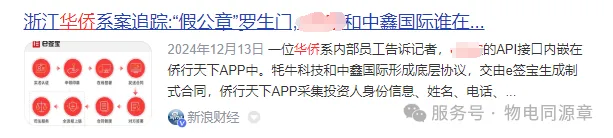 For instance, last year's notorious Hangzhou Overseas Chinese Fund incident in the financial sector, caused by a "fake seal" on an electronic contract, resulted in significant losses for investors and exposed rampant industry irregularities...Physical-Electronic Homologous Seals Reshape Industry Trust
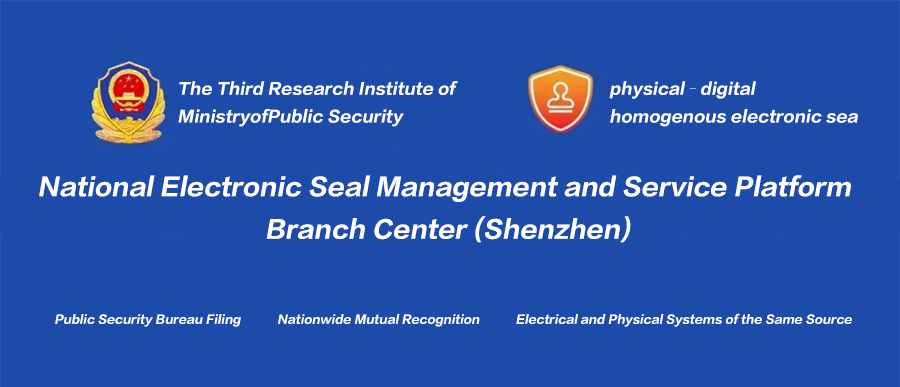 As the electronic seal industry finds itself mired in a trust crisis, public security-filed physical-electronic homologous seals are emerging as the key to breaking the deadlock. As electronic seals certified by the Third Research Institute of the Ministry of Public Security, they establish a security fortress with three layers of defense:Public Security FilingElectronic seals issued by the branch center (Shenzhen) of the National Electronic Seal Management and Service Platform are accompanied by electronic seal filing certificates issued by the Third Research Institute of the Ministry of Public Security, endowing them with authority and credibility.Nationwide RecognitionElectronic signature documents signed with electronic seals issued by the branch center (Shenzhen) of the National Electronic Seal Management and Service Platform can be uniformly verified and mutually recognized on the national platform of the Third Research Institute of the Ministry of Public Security.Physical-Electronic HomologyElectronic seals issued by the branch center (Shenzhen) of the National Electronic Seal Management and Service Platform will be upgraded from simple imagery to elemental, structured, and encrypted forms, achieving unified public security filing, supervision, and management for both physical and electronic seals from the same source.
 In the digital world, we need a more robust "identity safe." When electronic contracts carry commercial values worth millions or even billions, choosing physical-electronic homologous seals is not just selecting a technology but also upholding the spirit of the rule of law. With its cutting-edge "core" technology, it tells us that trust in the digital age must be built on a foundation of security.