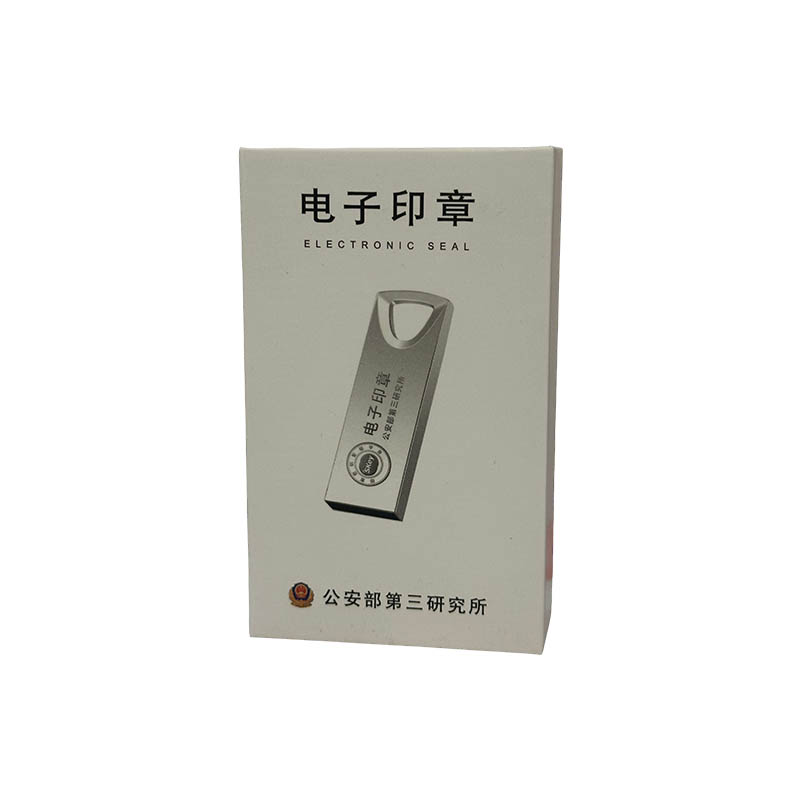
How does electronic official seal improve the convenience of approval and signing in remote work scenarios?
Publish Time: 2026-03-18
With the continuous development of digital office work, electronic official seals have gradually become an important tool in enterprise remote work systems. By digitizing and onlineizing the traditional stamping process, it removes the time and space constraints on approval and signing, significantly improving office efficiency and process convenience. In the context of increasingly normalized remote work, the application value of electronic official seals is becoming increasingly prominent.1. Breaking Space Limitations: Achieving Online Signing Anytime, AnywhereTraditional seals rely on physical circulation, requiring documents to be transferred between different departments or personnel, resulting in time-consuming and potentially delayed processes. Electronic official seals, relying on an internet platform, allow users to complete signing operations simply through a computer or mobile device. Whether in the office, at home, or traveling, as long as there is an internet connection, approval and stamping can be completed quickly, greatly shortening the business processing cycle.2. Online Processing: Improving Approval Efficiency and TransparencyElectronic official seals are typically deeply integrated with enterprise office systems, digitally managing the approval process. From document submission and review to final signing, everything can be completed online, with the system automatically recording each step. The approval process is clearly visible, allowing relevant personnel to track progress in real time, avoiding information asymmetry or process bottlenecks, thus significantly improving overall efficiency.3. Simple Operation: Lowering the Barrier to EntryCompared to the cumbersome process of traditional stamping, which requires printing, signing, stamping, and scanning/uploading, the electronic official seal can be completed with a simple click or identity verification. The system typically features an intuitive user interface and guided workflow, allowing even non-professionals to quickly get started. This convenient operation greatly reduces communication costs and time consumption in remote work.4. Security and Control: Ensuring the Reliability of the Signing ProcessThe electronic official seal uses encryption technology, identity authentication, and access control mechanisms to ensure the legality and uniqueness of every signing action. Only authorized personnel can use the corresponding seal, and the system automatically generates operation logs, enabling full traceability. This security mechanism not only prevents the misuse of seals but also provides reliable audit evidence for enterprises.5. Reducing Repetitive Operations: Optimizing WorkflowsIn remote work, repetitive operations often reduce efficiency. Electronic official seal supports templated documents and batch signing. For common contracts or approval documents, it can quickly retrieve and complete multiple signing tasks, avoiding repetitive operations. Simultaneously, the system can automatically archive signed documents, reducing manual organization and storage workload and making the overall process more efficient and streamlined.6. Facilitating Collaborative Work: Accelerating Business FlowElectronic official seal fosters closer collaboration between different departments. Approving personnel can receive and process tasks online without waiting for paper documents. Multiple approval nodes can flow automatically in parallel or sequentially, greatly improving cross-departmental collaboration efficiency. This efficient flow capability is particularly crucial in urgent business processing, helping companies respond quickly to market demands.By breaking down spatial limitations, enabling online processes, simplifying operational steps, and strengthening security controls, electronic official seal significantly improves the convenience of approval and signing in remote work scenarios. It not only optimizes traditional office models but also provides strong support for enterprises to build efficient and flexible digital office systems, becoming an important tool for driving the transformation of modern office methods.